

Last Updated: November 21, 2026
Quick Summary
Ethically made military style apparel can be worth buying when the brand proves its claims rather than relying on the military look. Check whether the garments are authentic surplus or reworked, name the facilities that produce them, and ask for audit documents. Verified sourcing and transparent pricing separate credible brands from marketing.
- Identify whether a garment is surplus, reworked surplus, or military-inspired new production before judging its ethics.
- Ask the brand to name the facility where each garment is cut, sewn or altered.
- Request a third-party social audit, such as SMETA or WRAP, along with its corrective-action plan.
- Ask for the percentage of profits going to a partner, the payment cadence, and confirmation of receipt.
- Inspect seams and zippers on reworked surplus when it arrives, and repair rather than replace.
Table of Contents
- What Ethically Made Military Style Apparel Actually Means
- Military Surplus, Reworked Garments and Military-Inspired Design
- How to Verify Ethical Sourcing and Labor Standards
- Comparing Our Rise LA Clothing Pieces on Price, Materials and Durability
- Environmental Impact and Why Reworked Surplus Makes Sense
- Military Heritage Brands: What to Compare Before You Buy
- Choosing Your First Piece From the Rise LA Collection
- Frequently Asked Questions
Are ethically made military style clothes worth buying? For many shoppers, the answer depends on what "ethical" actually means. Rise LA Clothing builds its pieces from reworked original 1950s U.S. military garments and sends a portion of profits to The Sparrow Foundation, which supports survivors of human trafficking in Louisiana. We think that combination is worth examining closely, so this guide walks through what ethically made military style apparel really involves, how to check the claims, and how the pieces compare on price, materials and durability.
What Ethically Made Military Style Apparel Actually Means
Ethically made military style apparel is clothing that draws on military design while meeting clear standards for how it is sourced, produced and sold. The military look alone says nothing about labor conditions or materials. A shopper should ask where the garment came from, who worked on it, and whether the brand can show how its social commitments operate in practice.
Rise LA Clothing approaches this through a specific model. Its garments begin as authentic vintage U.S. military surplus, and a portion of profits goes to U.S. Department of Labor reporting on forced labor and human trafficking. That federal resource is a useful starting point for understanding the labor issues this category involves.
Military Surplus, Reworked Garments and Military-Inspired Design
These three terms describe different things. Surplus is actual previously issued clothing. Reworked garments are surplus pieces altered for a new purpose. Military-inspired design is new clothing that copies the look without using any military-issued material.
Each has a different ethical profile. Surplus avoids new production but comes with the wear and history of its original use. Military-inspired design can be made new under any labor standard the brand chooses, so the origin of the labor matters more than the look. When you shop, identify which category a product falls into before you judge its ethics.
How to Verify Ethical Sourcing and Labor Standards
Brand claims are only useful if you can check them. Most top-ranking guides in this category stop at "look for transparency" without explaining what transparency actually looks like on paper. This section covers the specific documents, certifications and audit trails a shopper can request, and how to read them.
Start by asking the brand specific questions:
- Where is each garment made or reworked, and by whom?
- Is the reworking done in-house or by a contractor?
- What percentage of profits goes to a named partner, and how is that amount tracked?
- Does the partner publish annual reports or financial statements?
Those questions establish intent. Verification requires documents. Ask for the following, in this order:
1. A named factory or rework facility. A brand that cannot name the facility where its garments are cut, sewn or altered cannot be audited. For reworked surplus, the relevant facility is the one doing the alterations, not the original military supplier.
2. A social-compliance audit. The most common framework in apparel is a third-party social audit such as SMETA (Sedex Members Ethical Trade Audit) or WRAP (Worldwide Responsible Accredited Production). Ask which audit, who performed it, the date, and whether the brand will share the corrective-action plan. An audit with no corrective actions is a red flag; every real audit finds something.
3. A code of conduct with enforcement language. A code that prohibits forced labor, child labor and harassment is table stakes. The useful question is what happens when a supplier fails: suspension, remediation, or termination. Brands that publish their remediation policy are rarer and more credible than brands that publish only their values page.
4. Country-of-origin documentation. For U.S. military surplus, the original garment's contract label and National Stock Number (NSN) can help confirm its origin. A brand that says "Made in USA" without qualification should be able to show its substantiation.
5. Cause-linked financials. If a portion of profits goes to a named partner, ask for the percentage, the cadence (monthly, quarterly, annual) and whether the partner confirms receipt. The U.S. Department of State Trafficking in Persons Report outlines the standards used to assess anti-trafficking efforts and is a reference point for judging a cause-linked brand's claims.
Watch out: a brand that answers questions warmly but never produces a document is giving you marketing, not verification. The same applies to certifications displayed as logos without a certificate number you can look up in the certifying body's public directory.
Shoppers should treat unverifiable claims as unverified. A brand that answers these questions clearly, names its facilities and shares audit outcomes earns more trust than one that relies on vague language about values.
Comparing Our Rise LA Clothing Pieces on Price, Materials and Durability
Rise LA Clothing's pieces span a range of prices, and the materials and fit change with each garment. Because every item starts as authentic surplus, wear, fading and markings vary, and that variation is part of the product.
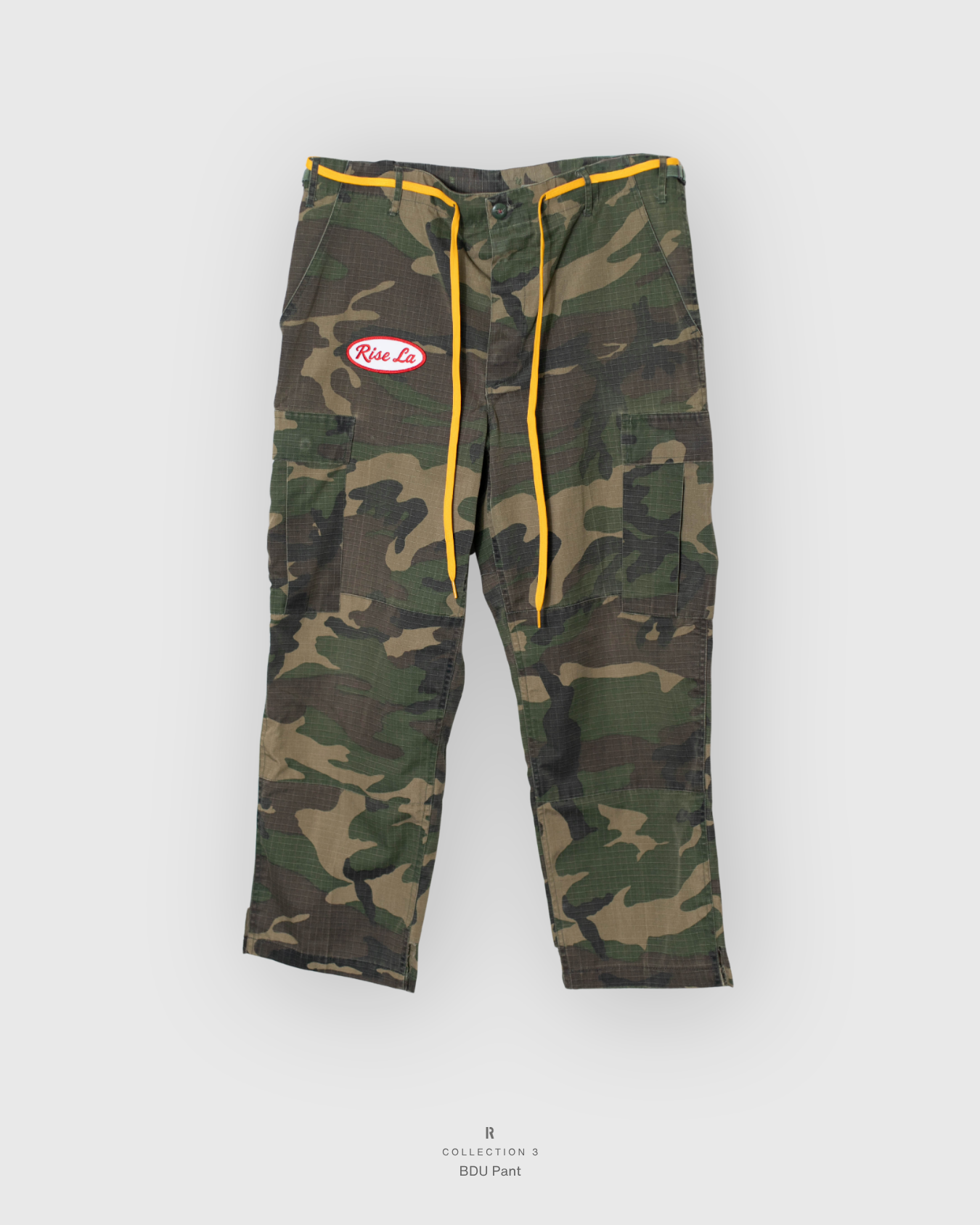
BDU Pant, Digi Camos and Desert BDU
The BDU Pant is priced at $100.00 and is made from 100% cotton with an adjustable waist, a custom split hem and a shoestring belt. Its full details and current price are on the product page.
The Digi Camos and Desert BDU are both priced at $100.00. Each is built on military-issue ripstop, with cargo pockets and reinforced knees. The Digi Camos add a hand-applied oval "Rise La" patch and a lace belt, while the Desert BDU keeps its patch as the only addition and includes waist adjusters for a tighter fit. Sizing follows military standards, with waist and inseam listed separately. Fading and wear vary from pair to pair.
Field Jacket 2.0, Quilted Bomber and Shacket Styles
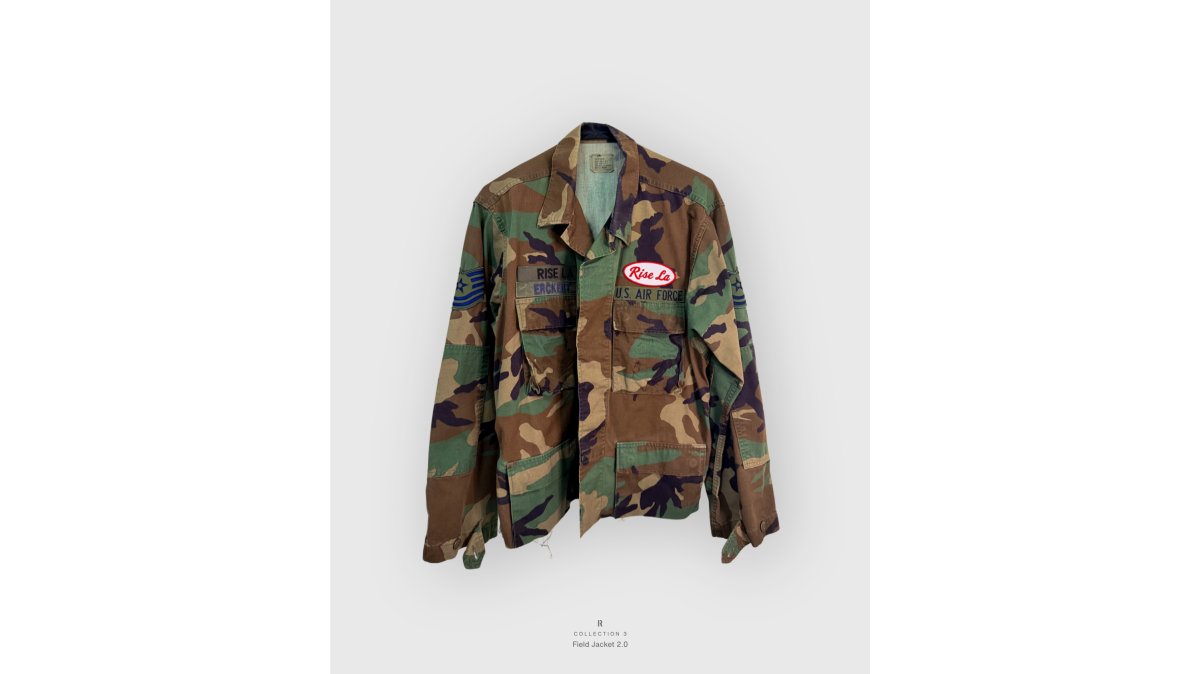
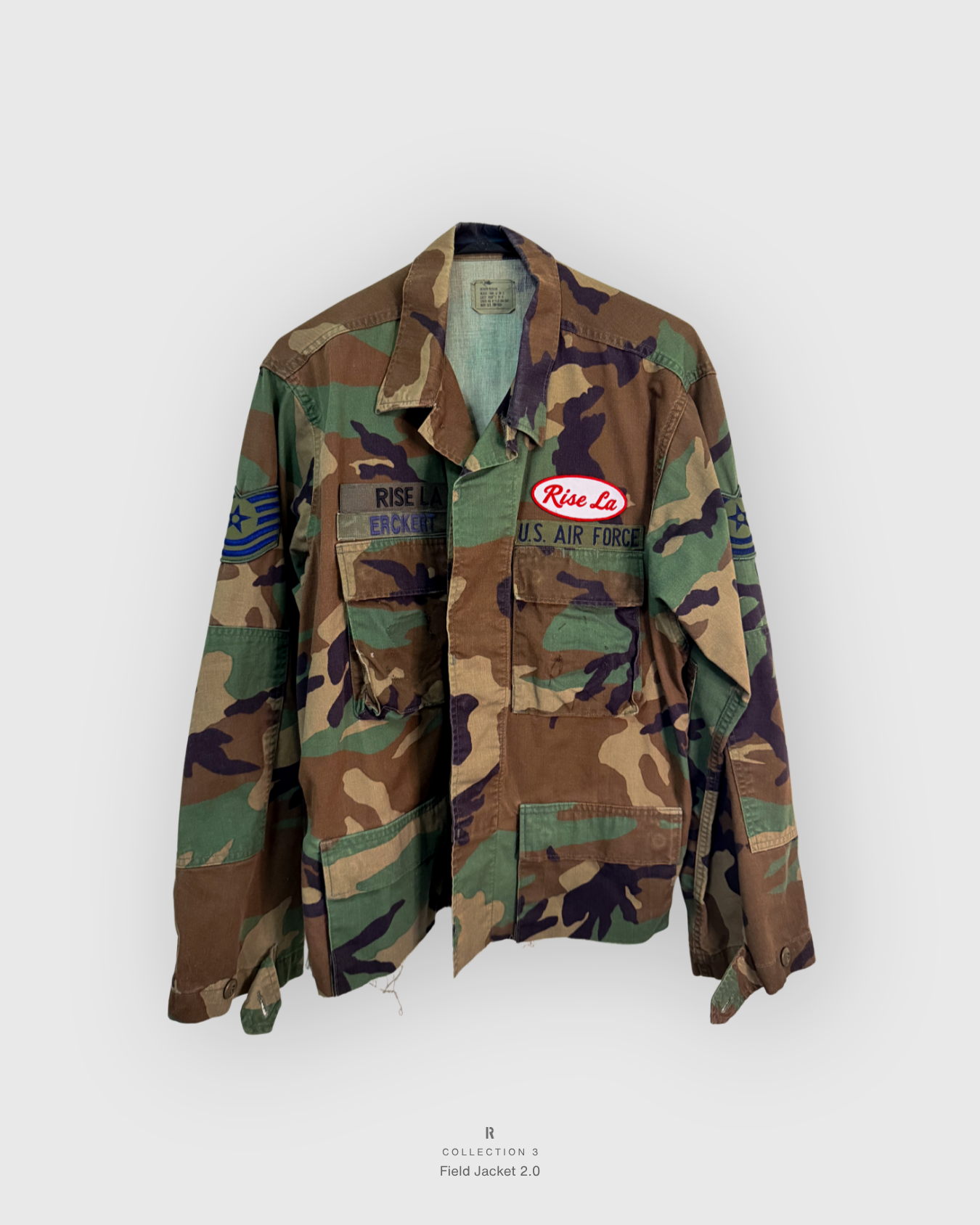
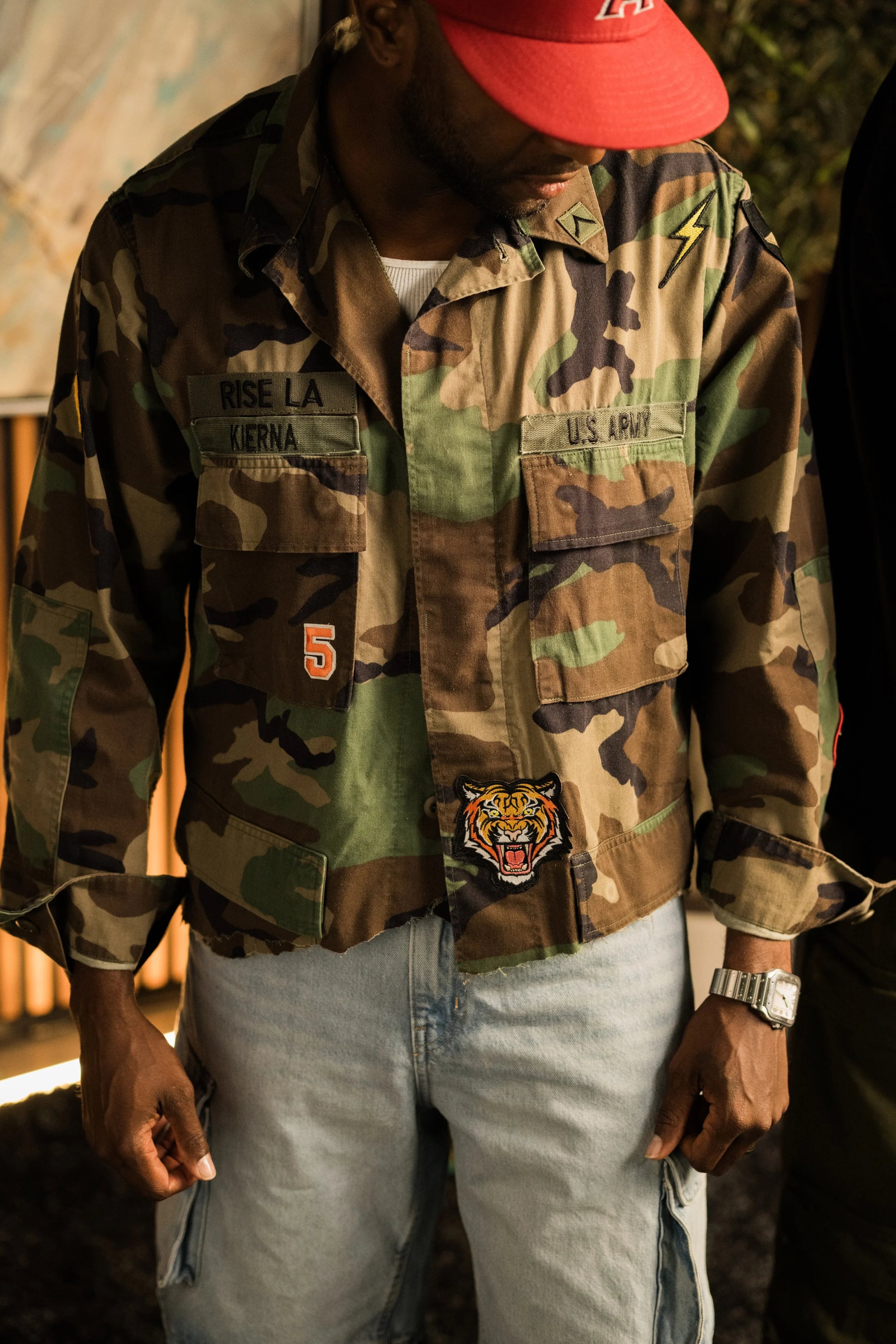
The Field Jacket 2.0 is priced at $100.00 and keeps the relaxed utility fit of the original field jacket. The Quilted Bomber, at $75.00, is the lowest-priced option in this group and reworks a military liner into a cropped silhouette. The shackets range from $150.00 to $200.00, depending on the style: the FW26 Shacket at $150.00 has hand-sewn lettering and paint detailing, while the Custom Camo Patch Shacket and Logo Woodland Camo Shacket are each priced at $200.00.
On price, the Quilted Bomber offers the most accessible entry point. On materials, the BDU Pant's 100% cotton is the most specific fabric claim the brand publishes.
Price of Rise LA Clothing pieces in USD
Environmental Impact and Why Reworked Surplus Makes Sense
Reworking existing garments avoids the resources needed to produce new clothing. The U.S. Environmental Protection Agency data on textile waste tracks how much clothing enters the waste stream each year, which is the problem reworked surplus is meant to reduce. But "avoids new production" is where most guides stop. The brand's Operation Upcycle program shows how it approaches this in more depth.
Materials. Conventional cotton, the fabric in the BDU Pant, is a natural fiber that biodegrades but is water- and pesticide-intensive to grow. Ripstop nylon, used in the Digi Camos and Desert BDU, is petroleum-derived and does not biodegrade, though it is strong per unit weight and therefore long-lasting.
Chemistry and water. New apparel typically involves dyeing, finishing and washing steps that consume water and can release process chemicals. Reworked surplus skips most of these steps, though cleaning and any re-dyeing or patch application still carry a footprint. Ask a brand what cleaning method it uses and whether it re-dyes; those answers separate a light-touch rework operation from one that is essentially manufacturing new garments from old fabric.
Packaging and shipping. A reworked garment still ships. Ask whether packaging is plastic-free, whether orders are consolidated, and whether the brand ships from the same facility where rework happens. Domestic rework and domestic shipping avoid the emissions of a round trip through an overseas factory.
Longevity. Durability is the most underrated environmental lever. A garment worn for ten years displaces roughly ten years of replacements. The trade-off is that pre-worn surplus arrives with unknown prior wear, so inspect seams, zippers and reinforcements on receipt and repair rather than replace.
Repair, resale and end-of-life. Ask whether the brand offers repairs, accepts returns for resale, or takes back worn pieces. A repair program extends life more effectively than any fiber choice. For pieces beyond repair, textile recycling drop-off is preferable to landfill, though municipal programs vary widely.
That benefit is real but limited. Surplus still has to be cleaned, altered and shipped, and each step has a footprint. The strongest case for reworked surplus is that it keeps usable garments in circulation rather than adding new production, and the strongest buying signal is a brand that can speak to cleaning, packaging, repairability and take-back, not just the word "sustainable."
Military Heritage Brands: What to Compare Before You Buy
When you compare brands in this category, look past the heritage story. Compare these factors side by side:
| Factor | What to Check |
|---|---|
| Origin | Surplus, reworked, or new military-inspired |
| Price | Starting price in USD |
| Materials | Fabric composition as stated |
| Sourcing | Named partners and reporting |
| Fit | Sizing system and fit notes |
Apply the same questions to every brand. A clear answer on sourcing and pricing matters more than the strength of the brand's story.
Choosing Your First Piece From the Rise LA Collection
If you are new to the collection, start with a piece that suits how you already dress. The Quilted Bomber at $75.00 is the lowest-cost entry, while the BDU Pant at $100.00 is a practical everyday choice.
Because each item is an authentic surplus garment, no two pieces are identical, so check the product details before ordering. Browse the Field Jacket 2.0 to see one of the brand's most structured jackets in detail. If your priority is the price-to-durability trade-off, why premium heritage apparel costs more to make explains the reasoning behind the cost.
For the ethics question, Ethical Fashion Brands Supporting Trafficking Survivors shows how a brand's labor and sourcing commitments play out in practice. Ethically made military style clothing can be worth buying, provided you check the claims and understand exactly what you are paying for.
Frequently Asked Questions
Where can I buy ethically sourced military style clothing?
Start with brands that publish their factory locations, labor policies and material sourcing, not just a patriotic brand story. Rise LA Clothing reworks authentic vintage U.S. military garments, so the sourcing question shifts from factory conditions to the origin of the surplus itself. Ask any seller where the base garment came from, whether it was previously issued, and how finishing work is done. Clear, specific answers are a better signal than general claims about values.
Is vintage or reworked military clothing more sustainable?
Reworked surplus avoids producing a new garment from raw materials, which is the main environmental advantage. The garment's lifespan still matters, so durability and fabric type count. The BDU Pant is 100% cotton with an adjustable waist, and the Digi Camos use a nylon and cotton ripstop blend. Compare fiber content and construction before assuming any piece is low impact.
What is the difference between military surplus and military-inspired clothing?
Military surplus is an actual garment that was issued and used by the armed forces, then sold off. Military-inspired clothing is newly made to resemble that look, usually with new fabric and new manufacturing. Rise LA's pieces, including the Vintage Olive Drab Shacket and Quilted Bomber, are built from authentic surplus, so wear, fading and markings are expected. Military-inspired pieces may be more uniform in appearance but carry a different sourcing story.
What should I look for in an ethically made clothing brand?
Look for specific, checkable information: where the garment was made, how the finishing work was done, and what the brand says about the people who do it. For Rise LA, the Digi Camos and Desert BDU are military-issue pants with the Rise La patch and finishing handcrafted locally in Louisiana, and a portion of profits supports The Sparrow Foundation. Verify the foundation's current reporting directly before relying on any donation claim.
