

Quick Summary
The operation upcycle alternative for ethical shoppers is reworked military surplus, which fits buyers who want a curated, story-driven piece with preserved history. Its origin is traceable to issued military stock, and prices run from $75.00 to $200.00.
- Reworked surplus is traceable to issued military stock, so origin is easy to verify.
- Prices range from $75.00 to $200.00, a planned premium purchase.
- Choose it for documented history and preserved fading in each piece.
- Ask who does the reworking and how much revenue goes to a named organization.
- Check the sizing guide first, since vintage military cuts fit differently.
Table of Contents
- How Operation Upcycle and Reworked Military Clothing Compare
- How to Shop Ethically for Clothes When Priorities Differ
- Choosing Your Next Reworked Piece at Rise LA
- Frequently Asked Questions
How Operation Upcycle and Reworked Military Clothing Compare
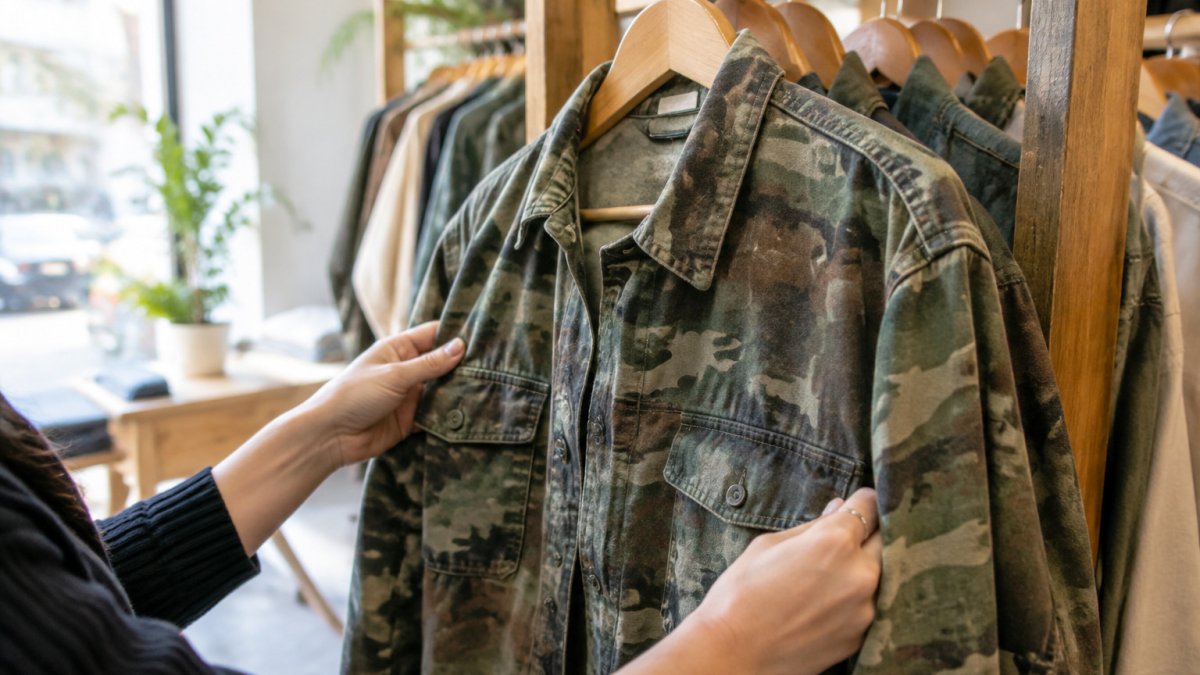
The criteria that matter most to ethical shoppers are origin, condition, uniqueness, labor and social impact, environmental impact, price, and access.
If you want a curated, story-driven piece with preserved military history, reworked surplus fits better.
The article's key criteria for ethical shoppers can be scanned at a glance:
| Criterion | Reworked surplus fit |
|---|---|
| Origin | Traceable to issued military stock |
| Condition | Documented history, preserved fading |
| Price | $75.00 to $200.00 |
| Best for | Curated, story-driven pieces |
How to Shop Ethically for Clothes When Priorities Differ
Ethical shopping depends on which constraint matters most to you. Rank your priorities first, then match the option to them.
- Budget first: Reworked surplus at $75.00 to $200.00 is a planned premium buy.
- Condition first: Reworked surplus suits buyers wanting documented history and preserved fading; for like-new, buy fewer longer-lasting new garments.
- Social impact first: Ask how much of each purchase goes to a named organization and who does the reworking.
- Environmental impact first: Favor options that extend garment life and keep transport short; repairing what you own usually beats buying anything new.
A "sustainable" label alone tells you little, so look for evidence in four places:
- Sourcing: For reworked surplus, the answer should be traceable to issued military stock.
- Labor practices: A named studio or program is stronger evidence than a generic claim.
- Impact reporting: Look for specific, dated numbers rather than broad percentages; if a seller cannot say what share of revenue goes where, treat the claim as marketing.
Sizing and affordability are real barriers. Vintage military cuts fit differently, so check the sizing guide before ordering.
If you cannot verify a claim, buy less and keep what you own in use longer.
Choosing Your Next Reworked Piece at Rise LA
Start with a piece that fits your priorities. The Logo Woodland Camo Shacket - Large is a reworked piece with a relaxed shacket fit, priced at $200.00. For a utilitarian option, the BDU Pant reworks authentic U.S. military trousers at $100.00.
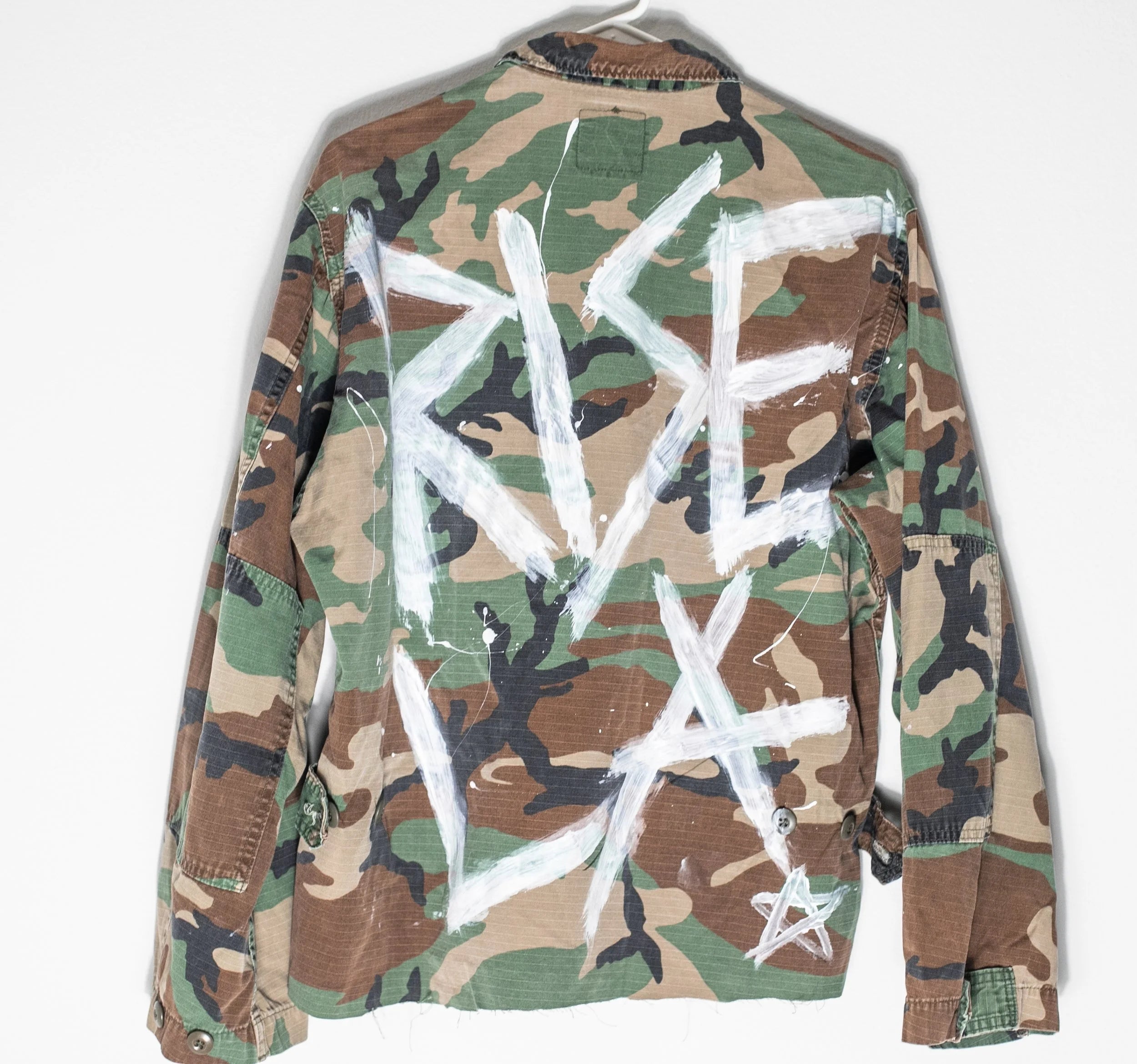
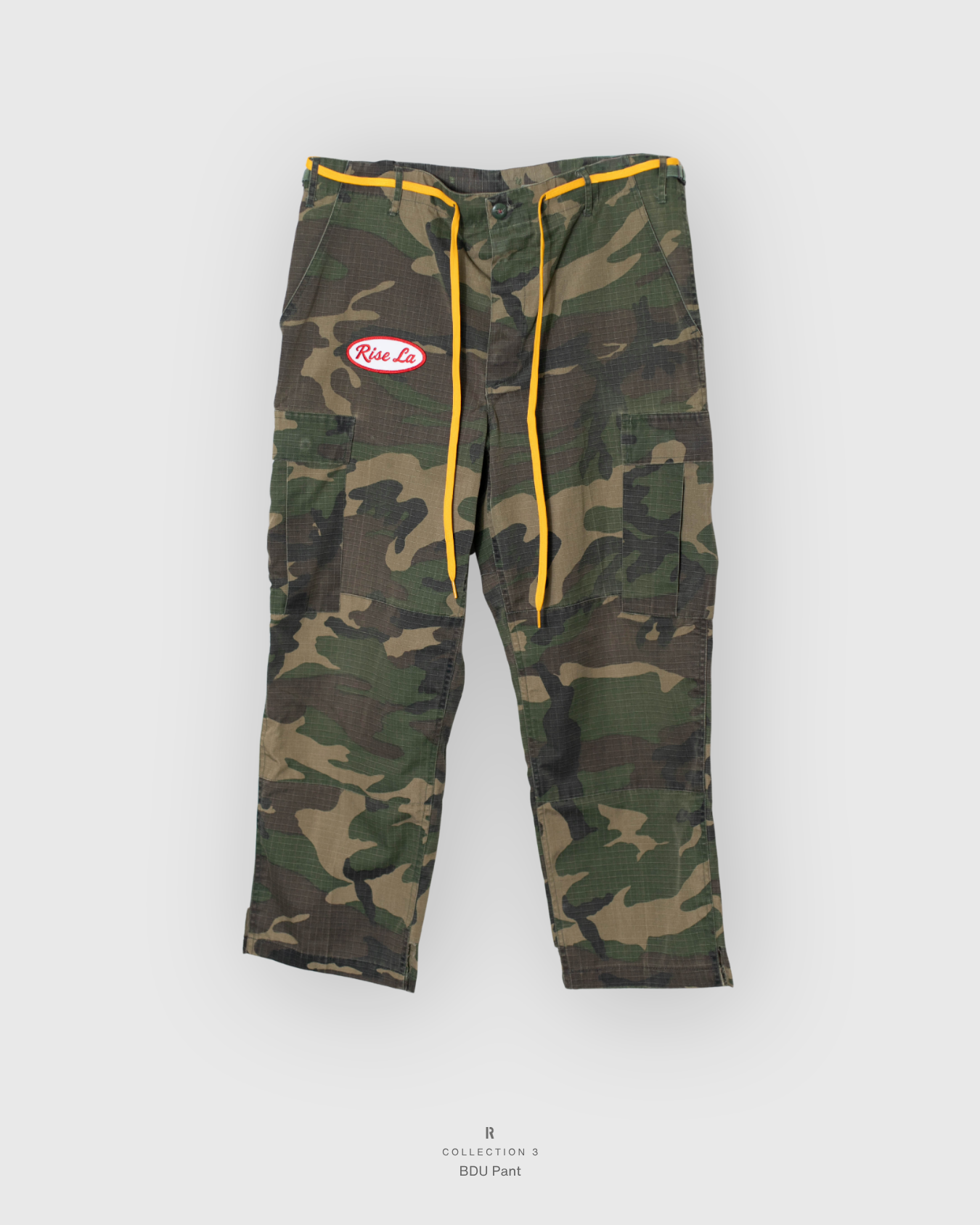
Before ordering, review the sizing guide for vintage military surplus, since vintage cuts fit differently. If durability is your main concern, this guide on finding clothing that lasts explains what to check.
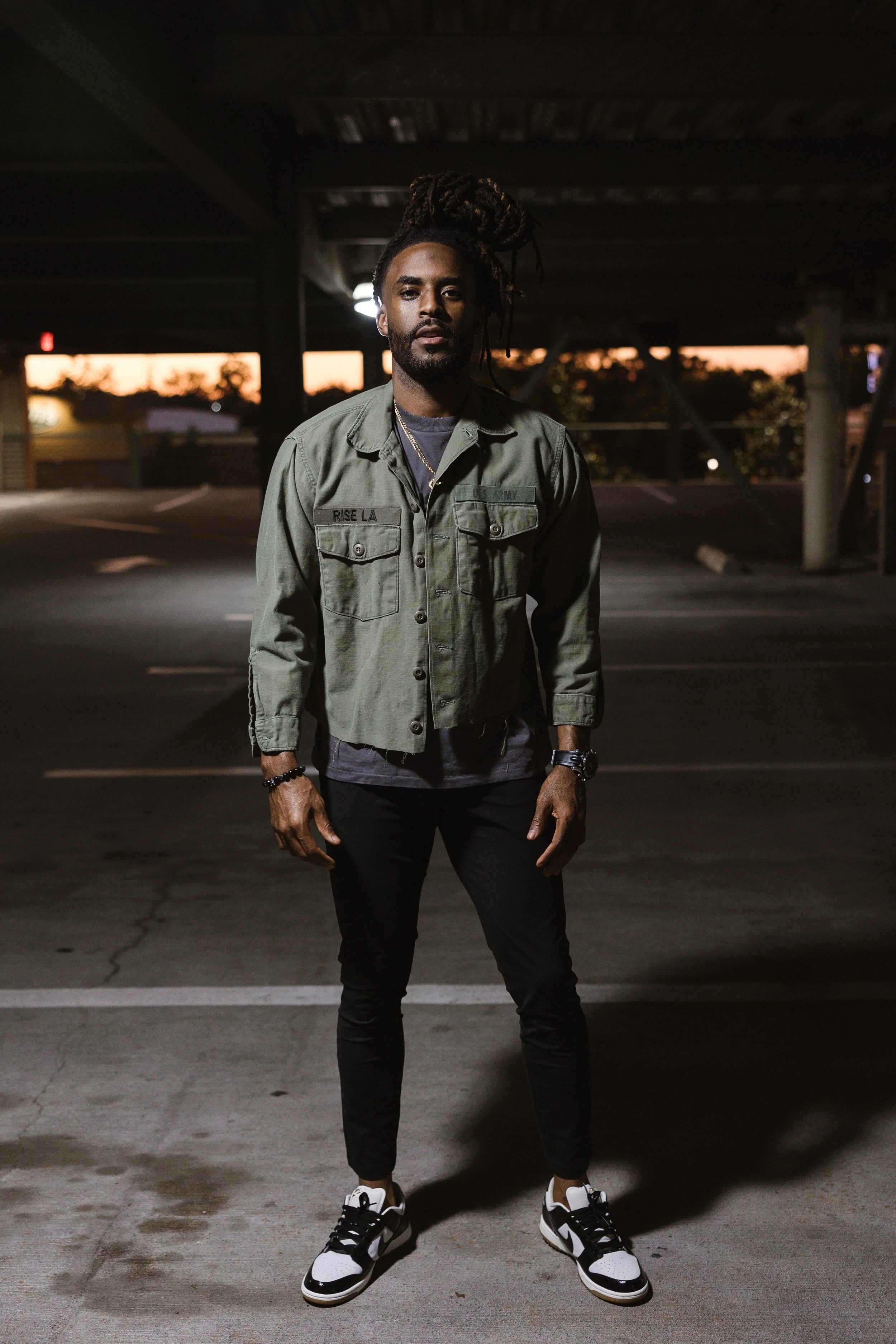
The Vintage Olive Drab Shacket #1 is a one-of-one piece, priced at $200.00.
Frequently Asked Questions
What is upcycled military clothing?
Upcycled military clothing starts with authentic surplus garments that were previously issued by the U.S. military and reworks them into new silhouettes. Rise LA's pieces, such as the Quilted Bomber at $75.00 and the BDU Pant at $100.00, keep the original fading, stitching and markings intact. Because each garment has its own wear history, no two pieces are exactly alike, and that variation is part of what you are buying.
Is vintage clothing more sustainable than buying new?
Buying secondhand extends the life of garments that already exist, which avoids new production and reduces demand for fresh materials. Rise LA's shackets, such as the Logo Woodland Camo Shacket and the Vintage Olive Drab Shacket at $200.00 each, are built from authentic military surplus rather than new fabric. Durability still matters, so look for heavyweight construction and a clear description of wear and condition before you order.
What should I look for when buying reworked military clothing?
Check the listing for whether the piece is authentic surplus, the fabric composition and the fit notes. For example, the BDU Pant is listed as 100% cotton with an adjustable waist, and the Vintage Olive Drab Shacket is listed as fitting approximately Large. Expect fading, scuffs, markings and repairs, since these signs of wear are part of the garment's history rather than defects.
Reworked surplus price points from Rise LA
