

Last Updated: November 12, 2026
Quick Summary
To find durable clothing that lasts, judge three things: the fiber, the weave, and the construction. Look for long-staple cotton or sturdy blends, dense weaves, reinforced stress-point seams, and clean interior finishing before you buy.
- Check fiber length, since long-staple cotton pills less and holds color longer than short-staple cotton.
- Pull side and shoulder seams gently and look for gaps between stitches that could split.
- Hold the fabric up to light, because thin spots or visible gaps point to early wear-through.
- Wash in cold water on gentle cycles and avoid high-heat drying to slow fiber damage.
- Divide the price by expected wears to compare the real cost of each garment.
Table of Contents
- What Makes Clothing Durable in the First Place
- Clothing Materials That Last the Longest
- How to Tell If Clothes Are Well Made
- How to Find Durable Clothing That Lasts Online
- How to Make Clothes Last Longer After You Buy Them
- Choosing Your First Durable Pieces Next Steps
- Frequently Asked Questions
What Makes Clothing Durable in the First Place
Durable clothing comes down to three things: the fiber, the weave, and the construction. Most shoppers only check the first.
Start with the fabric. Dense weaves, long-staple cotton, and sturdy blends resist pilling and stretching better than thin, loosely knit cloth.
Then look at construction. Reinforced seams, double-stitched stress points, and clean interior finishing signal that someone planned for wear.
The practical test: ask whether each element was built to last or built to look good for one wear.
Clothing Materials That Last the Longest
Fiber choice sets the ceiling for longevity, but the fiber name on the label tells you less than its measured properties.
Start with staple length in natural fibers.
Synthetics behave differently.
Blends confuse most shoppers. A cotton-polyester blend can improve wrinkle resistance and dimensional stability, but a high synthetic share often signals cost-cutting.
Weave and knit structure matter as much as fiber.
A practical comparison for common fibers:
- Cotton: strong when dry, weaker when wet; long-staple versions resist pilling; heavyweight jersey (180-220 GSM) and twill outlast light jersey.
- Wool: excellent odor resistance and shape recovery; merino at finer microns is softer but less abrasion-resistant than coarser wool used in outerwear.
- Linen: very strong fiber, low elasticity; best in looser weaves for breathability, tighter weaves for durability.
- Polyester/nylon: high tensile strength, low moisture absorption; prone to odor retention and pilling when fiber length is short.
- Silk: strong for its weight but sensitive to sunlight and perspiration; best reserved for lower-friction garments.
USDA Agricultural Research Service overview of natural and synthetic textile fibers
Our heavyweight drop shoulder cotton tee is a good example of a durable everyday fabric.
How to Tell If Clothes Are Well Made
A quick inspection in a store or on delivery can reveal most construction problems. Work through the garment slowly rather than judging at a glance.
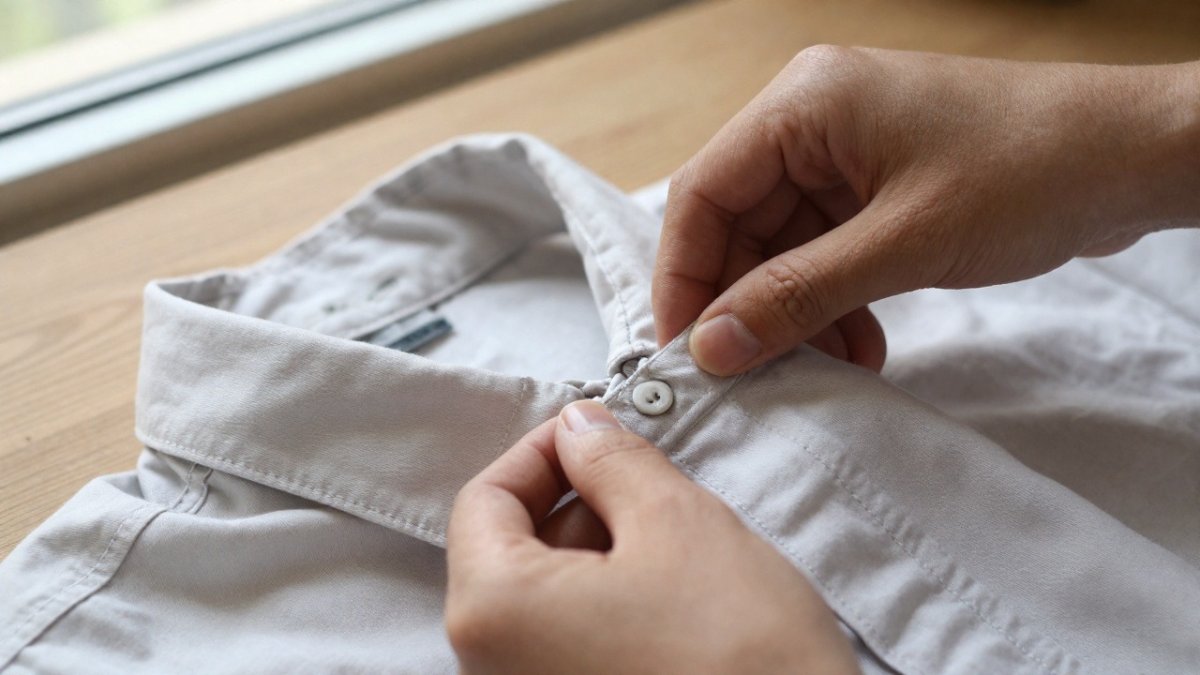
Follow these steps:
- Pull the seams gently. Tug along side seams and shoulder seams. If you see gaps between stitches, the seam will likely split.
- Count the stitches per inch. Denser stitching generally holds better under stress. Look especially at hems and armholes.
- Check the inside finish. Clean, overlocked or bound edges last longer than raw, fraying edges.
- Hold the fabric up to light. Thin spots or visible gaps in the weave point to a fabric that will wear through early.
- Inspect buttons and zippers. Buttons should be secured with thread shanks, and zippers should run smoothly without catching.
Watch for warning signs of poor craftsmanship: puckered seams, uneven hems, loose threads that unravel when pulled, and fabric that feels thin for its price.
Our womens cropped mech shirt shows what solid construction looks like up close. Compare the seams and finishing against a garment you already own to see the difference.
How to Find Durable Clothing That Lasts Online
Shopping online makes judging quality harder, but you can still gather strong signals before you buy.
Read product pages for specifics. Fabric weight, fiber content, and construction details should be stated clearly.
Check photos for close-ups of seams, hems, and stitching.
Read reviews critically. Comments on how a garment held up after several washes are far more useful than first impressions.
Pay attention to return policy and fit guidance. Our field jacket 2 0 lists its construction and materials in detail, so you can judge its build before ordering.
How to Make Clothes Last Longer After You Buy Them
Most premature wear happens after purchase, not on the rack. The biggest gains come from a handful of habits most care labels never explain: the mechanisms behind fiber degradation, a basic repair routine, and a cost-per-wear framework.
How laundry actually degrades fibers
Three forces do most of the damage: mechanical agitation, heat, and chemistry.
- Agitation works surface fibers loose, causing pilling and thinning. Front-loaders on gentle or hand-wash cycles reduce drum friction versus aggressive top-loaders. Washing inside out and using mesh bags for knits and delicates further limits abrasion.
- Heat shrinks cotton, relaxes elastane cores, and sets wrinkles in synthetics. Cold water (roughly 60-80°F) handles most everyday soils and dramatically reduces fiber stress versus hot cycles. High-heat drying is the single fastest way to shorten a garment's life.
- Chemistry matters less than most think. Heavy detergents with optical brighteners and enzymes can accelerate color loss on dark garments over many washes. A gentle, pH-neutral detergent is usually enough; reserve stronger formulations for stains.
People who keep clothes for years share a pattern: fewer, fuller loads on gentle cycles, cold water, and air drying. Wash less often than habit suggests, a tee worn indoors for a few hours usually needs airing, not laundering.
A basic repair routine that pays for itself
Small failures become large ones if ignored. A loose button today is a torn placket next month. Keep a small kit: needles in two sizes, polyester thread matched to the garment, a seam ripper, small scissors, and spare buttons.
- Sewing a button: use a thread shank (a small gap of thread between button and fabric) so the button sits above the fabric and doesn't stress the buttonhole. Pass through the holes several times, then wrap the thread around the shank before knotting.
- Darning a small hole: for knits, weave a grid of thread across the hole, alternating over and under, then turn 90 degrees and weave the opposite direction. This restores structure without a patch.
- Fixing a seam split: turn the garment inside out, align the original stitch line, and backstitch over the gap, overlapping the intact seam by at least half an inch on each side.
Watch out: repairing a seam with a knot on the outside of the garment creates a friction point that can abrade the fabric with wear, bury knots between layers or on the inside.
Cost-per-wear: the framework
Cost-per-wear (CPW) is price divided by the number of times you expect to wear the item. A $120 jacket worn 60 times costs $2 per wear; a $40 piece worn twice before failing costs $20 per wear. It is most useful applied before buying, not after.
To estimate realistically:
- Count how many times per month you would actually wear the item in your current routine.
- Multiply by the seasons or years you expect it to last, based on fiber and construction.
- Divide the price by that total.
A $90 heavyweight tee worn twice a week for three years works out to roughly $0.29 per wear; a $25 lightweight tee worn twice a week for six months works out to about $0.48 per wear. The cheaper garment is not always the better value once expected lifespan is included.
Federal Trade Commission guidance on textile fiber content labeling
Our field jacket 2 0 lists its construction and materials in detail, which makes it easier to estimate lifespan and run a cost-per-wear comparison before ordering.
Most premature wear happens after purchase, and a few habits make the biggest difference.
| Factor | Effect on clothing | Recommended approach |
|---|---|---|
| Agitation | Works surface fibers loose, causing pilling and thinning | Use gentle cycles; wash inside out; use mesh bags for knits |
| Heat | Shrinks cotton, relaxes elastane, sets wrinkles in synthetics | Cold water (about 60-80°F); avoid high-heat drying |
| Detergent | Heavy formulas can fade dark garments over many washes | Use gentle, pH-neutral detergent; save stronger ones for stains |
| Wash frequency | Excess laundering adds wear | Air out lightly worn garments instead of washing |
| Cost-per-wear | Cheaper items can cost more per wear | Divide price by expected number of wears |
Choosing Your First Durable Pieces Next Steps
Start small. Pick one or two staples you wear most, a tee, a shirt, or a jacket, and evaluate them using the fabric, construction, and care checks above. Building a durable wardrobe is gradual, not a single purchase.
Once you know what to look for, the rest gets easier. Rise LA Clothing makes heritage-inspired staples from reworked 1950s U.S. military garments and premium materials, and a portion of profits supports The Sparrow Foundation. If you want a first piece built to last, our mens rise jean is a solid place to begin.
Frequently Asked Questions
Where can I find clothes that actually last?
Look for brands that publish fabric composition, construction details, and care instructions, and that describe their garments with specific measurements rather than vague marketing words. Independent reviews, customer photos showing wear over time, and return policies that cover defects are also useful signals. Shopping from brands that name their factories or explain their sourcing tends to give you more information to judge durability before you pay.
How can you tell if clothes are well made?
Check the seams first: they should be tight, even, and reinforced at stress points like underarms and crotches. Look at stitch density, which is the number of stitches per inch, and check whether buttons and hems are secured properly. Hold the fabric up to light to see how dense the weave is, and pull gently at the seams to test for give. Garments that pass these checks at the store or in product photos are more likely to hold up through repeated washing and wear.
Does expensive clothing always last longer?
No. A higher price does not guarantee durability, since some brands charge more for branding while using the same materials as cheaper options. Cost-per-wear is a better measure: divide the price by the number of times you expect to wear the item. A $150 pair of well-made trousers worn 150 times costs $1 per wear, while a $40 pair worn 10 times costs $4 per wear. Check construction and fiber content rather than relying on price alone.
How can I make my clothes last longer?
Wash less often and use cold water on a gentle cycle, which reduces fiber breakdown. Turn garments inside out, use a mesh laundry bag for delicate items, and avoid high-heat drying, which shrinks fibers and weakens elastic. Repair loose buttons, small holes, and open seams promptly, since small damage spreads quickly. Store knitwear folded rather than hung so it does not stretch out of shape.
