

Quick Summary
Whether reworked military jackets are comfortable depends mostly on fabric weight, lining, and how the garment was altered. Heavyweight canvas feels stiff at first and softens with wear, while a cropped hem or removed lining changes how the jacket moves and feels against the body.
- Heavyweight canvas feels stiff at first and usually loosens within several weeks of regular wear.
- A satin lining slides easily over a sweater, while a quilted lining adds warmth but can restrict the upper arm.
- Check that the shoulder seam sits at or just past your shoulder, not hanging down your arm.
- Measure the listing against a jacket you already find comfortable, because vintage letter sizing is unreliable.
- Heavier pieces suit cool weather and layering; lighter pieces suit mild days and wear comfortably sooner.
Table of Contents
- What Makes a Reworked Military Jacket Comfortable
- Types of Military Jackets and How Each One Feels
- M65 Field Jacket Comfort: Layering and Warmth Across Seasons
- Military Jacket Fit: Sizing and Alterations for Reworked Pieces
- Choosing a Reworked Jacket You Will Actually Wear
- Frequently Asked Questions
What Makes a Reworked Military Jacket Comfortable
Whether a reworked military jacket is comfortable depends mostly on fabric weight, lining, and how the garment was altered, since each reworked military jacket starts as an original piece built for a different purpose. Original surplus is built for function and warmth, not for a relaxed day in the city, so the rework is what decides how it feels on your body. Rise LA Clothing's reworked pieces start with authentic vintage U.S. military garments.
Fabric weight and the heavyweight question
Heavyweight cotton canvas is the first thing most buyers notice. It feels stiff and substantial in the hand, and that stiffness softens over time. A heavyweight jacket will not feel like a sweatshirt, but it should move with you once it has been worn in.
Heavier fabric adds warmth and wind resistance, which is why field jackets, and the reworked military jackets built from them, were designed the way they were. The tradeoff is weight on the shoulders and less breathability on mild days. For most people, a heavyweight piece works best in cool weather and as a layering piece in winter, not as a primary layer in warm months.
Lining, insulation and the wear-in period
Many vintage field jackets carry a quilted or satin lining, and the lining often determines how the jacket feels against your skin. A satin lining is smooth and slides easily over a sweater. A quilted lining adds warmth but also bulk, which can restrict the upper arm if the jacket is cut close.
Expect a break-in period. Original surplus takes time to soften, and the first few wears can feel rigid at the collar and under the arms. Most people find the fabric loosens within several weeks of regular wear.
Types of Military Jackets and How Each One Feels
Military jackets vary a great deal in cut and purpose, and that variation changes comfort more than most buyers expect.
Field jackets are the classic utility design, usually with a stand collar, four front pockets, and a relaxed body. The comfort signature comes from the boxy cut: there is room through the chest and waist, so the fabric does not pull when you reach or sit. The trade-off is bulk. A field jacket with a quilted liner can add noticeable weight across the shoulders, and the lower cargo pockets can swing against the hip when you walk. In a car or at a desk, the stiff collar and the pocket flaps are the parts most people notice first.
Shackets are shorter, shirt-length overshirts, lighter than a full jacket and easier to wear indoors.
Cropped jackets end at the waist, which improves mobility and reduces the bulk you feel when sitting.
M-65 and other classic field styles sit between these categories. The M-65's defining comfort feature is its removable liner: with the liner in, it is a cold-weather jacket; with the liner out, it is a lighter shell with more room through the body.
Pros and cons by style:
- Field jacket: Pro: warmth, durability, room for layers, pockets that keep hands free. Con: heavy, can feel bulky in a small car or office chair, stiff collar until broken in.
- Shacket: Pro: light, easy to wear all day, works indoors, hem does not bunch when seated. Con: offers less warmth in cold weather, limited wind resistance.
- Cropped jacket: Pro: freedom of movement, comfortable when seated, lighter on the shoulders. Con: less coverage in wind and rain, hem can ride up when reaching.
- M-65 with liner: Pro: adaptable across seasons, removable bulk. Con: liner adds weight and warmth that can overheat in mild weather.
Watch out: a jacket labeled "field jacket" can be cut slim or boxy, and the label alone tells you nothing about whether it will feel comfortable over a sweater.
The four comfort variables below separate one military jacket style from another, and the article's style-by-style pros and cons make the trade-offs easy to scan.
| Style | Comfort strength | Main trade-off |
|---|---|---|
| Field jacket | Room through chest and waist | Heavy and bulky |
| Shacket | Light, hem does not bunch when seated | Less warmth |
| Cropped jacket | Freedom of movement when seated | Less coverage in wind and rain |
| M-65 with liner | Adaptable across seasons | Liner can overheat in mild weather |
M65 Field Jacket Comfort: Layering and Warmth Across Seasons
The M65 field jacket is the most common reference point for military outerwear, and it is one of the most useful pieces to understand when judging comfort. Its design balances warmth with the ability to layer, which is why it has remained popular in civilian wardrobes for decades.
Across seasons, the M65 performs best as a middle or outer layer. In spring and fall, wear it over a long-sleeve tee or a light knit. In winter, layer a fleece or sweater underneath and keep the inside pockets free so the fabric does not bunch.
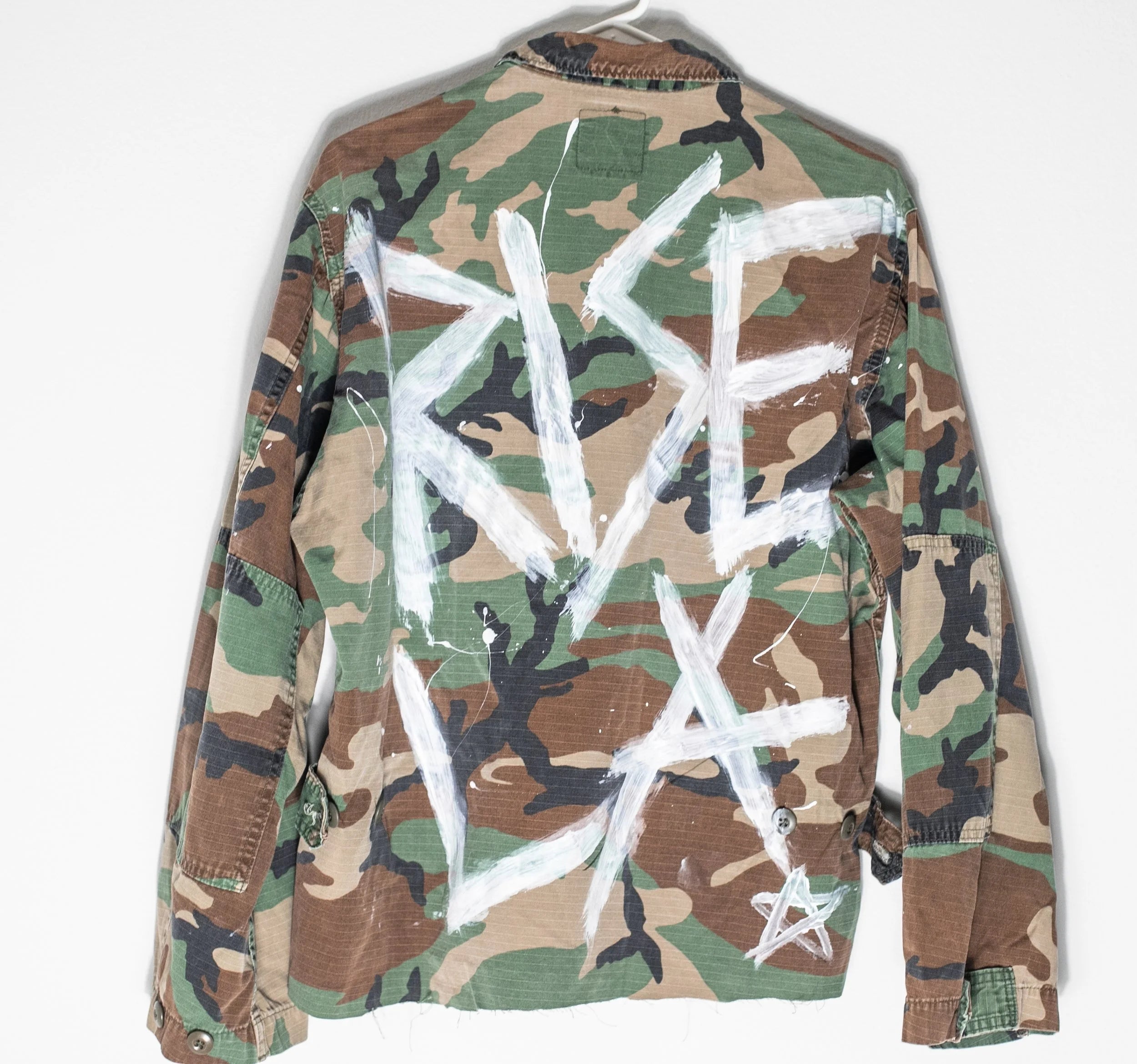
The Logo Woodland Camo Shacket from Rise LA Clothing has a relaxed shacket silhouette that makes it easy to layer, and it is built from authentic vintage military surplus. View the Logo Woodland Camo Shacket in Large to see how it suits your layers.
Military Jacket Fit: Sizing and Alterations for Reworked Pieces
Fit is where many buyers get surprised, and on a reworked jacket it is also where comfort is won or lost.
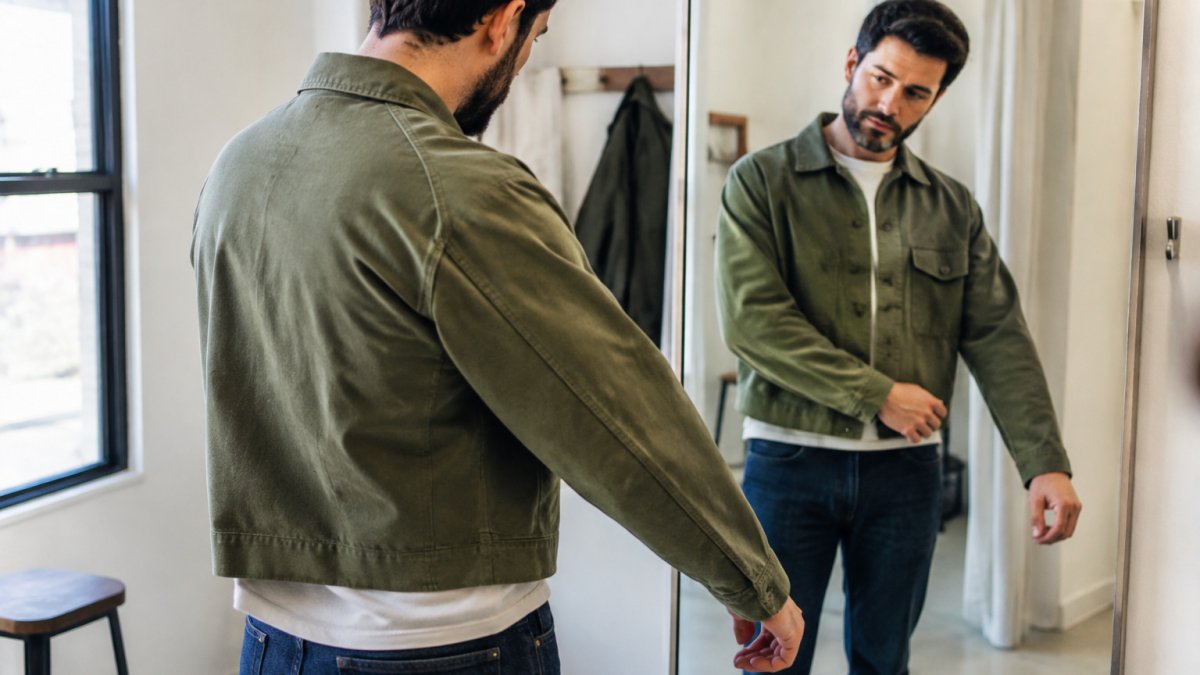
Start with the shoulder seam. On a well-fitting jacket it should sit at or just past your shoulder, not hang down your arm. A dropped shoulder looks relaxed but shifts the sleeve weight outward, which can make the jacket feel heavier than it is.
Rework alters comfort in specific ways, and it helps to know which alterations you are looking at:
- Cropped hems remove fabric from the body, which lightens the jacket and stops it bunching when you sit. The trade-off is less coverage at the lower back and a hem that can ride up when you raise your arms.
- Removed linings make a jacket cooler and less bulky through the upper arm, but they also remove the smooth layer that helps the jacket slide over a sweater. An unlined heavyweight canvas can drag against a knit.
- Shortened sleeves improve the look but can stiffen the cuff if the original hem and buttons are reattached. Check that the cuff still opens wide enough to get your hand through.
- Added patches and embroidery add weight and stiffness to one area of the garment. A large back patch can make the jacket feel tighter across the shoulders, and a stiff patch at the elbow can restrict arm bend until it softens.
- Taken-in bodies are the hardest alteration to get right on a boxy field jacket, because the original panels and seams carry the garment's structure. A jacket taken in too aggressively can pull at the chest and limit reach.
Because each reworked piece is one of one, letter sizing is unreliable. Compare the listed measurements against a jacket you already own and find comfortable: lay your jacket flat, measure pit to pit, shoulder seam to shoulder seam, and the back length from the collar seam to the hem. The sizing guide for vintage military surplus covers measurements and labels to help you check each one.
Fit also depends on what you wear underneath. A heavy knit under a field jacket changes the feel of the shoulders, so try the jacket on with the layers you actually plan to wear.
Watch out: a reworked jacket that fits perfectly over a T-shirt can become uncomfortable over a sweater, and because the piece is one of one you cannot size up later. Measure for the layer you will wear most.
Choosing a Reworked Jacket You Will Actually Wear
The best reworked jacket is the one you reach for again. Start by deciding where you will wear it most. A cropped jacket suits daily errands and driving. A field jacket suits cold walks and outdoor weekends.
Consider fabric and lining against your climate, your typical layers, and how much bulk you can tolerate. If you are weighing ethical options, read the article on ethical alternatives for shopping reworked pieces. Heavier pieces are warmer and more durable but need more time to feel comfortable.
Check the product details carefully. Each reworked piece is one of one, so fading, markings, and stitching will vary, and the listing describes what is specific to that garment.
For a practical starting point, the Logo Woodland Camo Shacket in Large suits buyers who want a relaxed, layerable piece for everyday wear, and it is available now at $200.00.
Last Updated: November 22, 2026
Frequently Asked Questions
Are reworked military jackets comfortable for everyday wear?
Most are, provided the fit suits your build and the fabric has had time to soften. Authentic vintage surplus can feel stiff when new and typically loosens with wear. Reworked versions often have a relaxed or cropped cut that allows more movement than the original uniform silhouette. Expect a short break-in period, and check the garment's measurements before ordering so the shoulders and sleeves sit comfortably rather than restricting your arms.
Do reworked military jackets fit differently from modern jackets?
Yes. Military garments were cut for layering over uniforms and for a specific range of motion, so the cut is often boxier through the body and sleeves than a modern slim jacket. Reworking changes the proportions further, with hemlines shortened and silhouettes relaxed. Because each piece starts as a different vintage garment, measurements vary between pieces even within the same size label. Compare chest, shoulder and sleeve measurements against your own rather than relying on the size tag alone.
Are M65 field jackets comfortable in cold weather?
The M65 field jacket is designed for cold and wind, with a sturdy outer shell and a removable liner on many versions, so it provides good warmth for cool to cold conditions. Its weight and stiffness can feel restrictive during high-activity wear or in mild weather, where it may cause overheating. Layering a light sweater underneath works well, and unbuttoning the front or removing the liner helps regulate temperature across seasons.
How do I know what condition a reworked vintage jacket is in before I buy?
Look for product listings that describe fading, markings, stitching and wear specifically, and check the measurements provided for each piece. Because reworked jackets begin as authentic surplus, each one carries natural variation, so the listing should say that these details may differ. Review the photographs closely for wear around the cuffs, collar and pocket edges, which are the areas most affected by age. Contact the seller with questions about sizing before purchase if the listing leaves anything unclear.
